
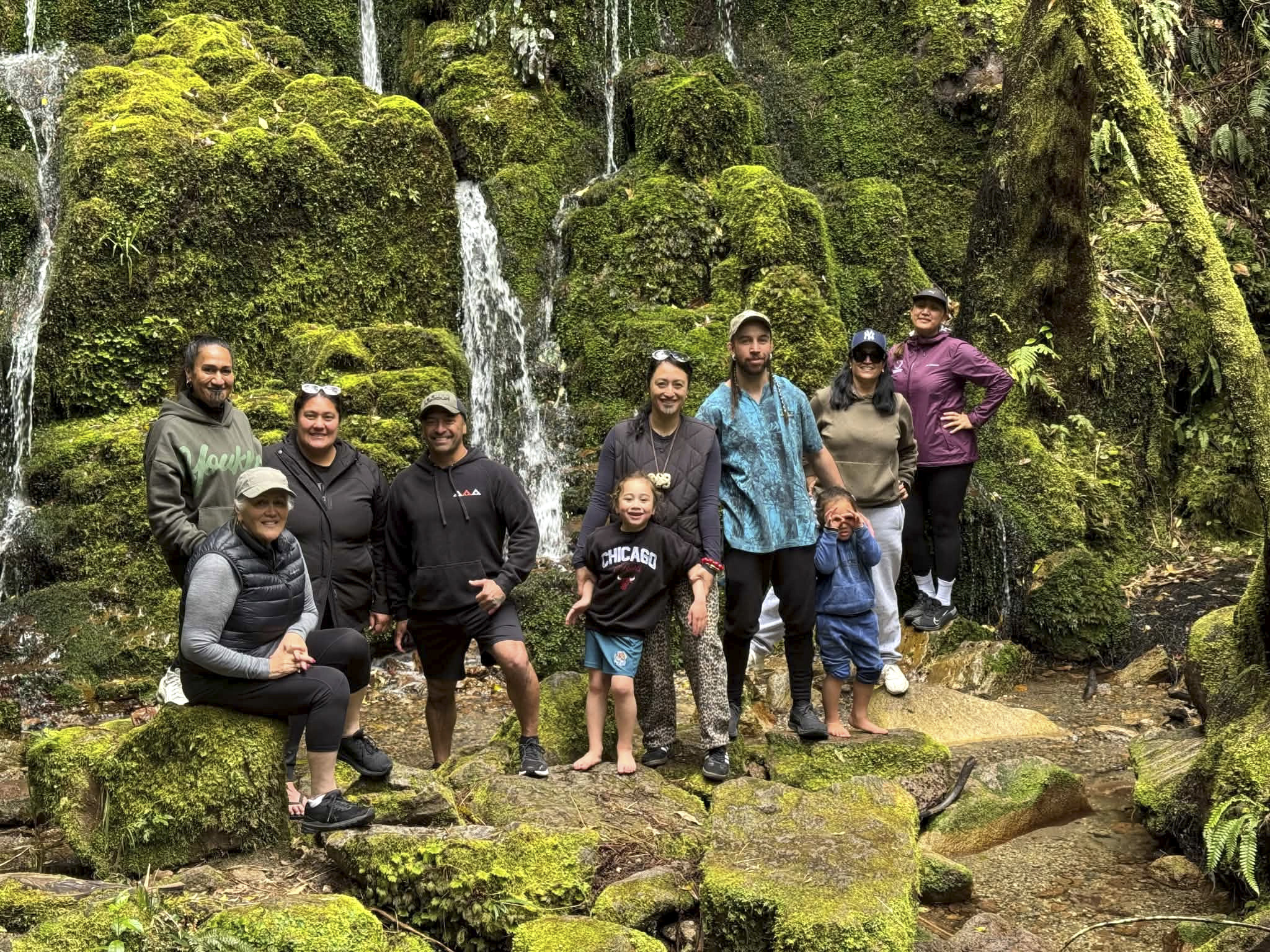
Māori have long recognised spending time in the taiao as an important part of maintaining hauora, and a three-day Workforce Wellness Wānanga at Lake Ōkataina has reaffirmed that connection for the Healthy Families Rotorua team.
Supported through Hauora Māori Services’ Mātauranga Māori Solutions funding, the wānanga brought the team together to experience traditional approaches to wellbeing through wai, ngahere, mātauranga Māori and whakawhanaungatanga.
Group Manager Jenny Kaka-Scott says the wānanga gave the organisation an opportunity to consider how it could apply its prevention approach to workforce wellbeing.
“We often talk about prevention in terms of improving the conditions that shape the health and wellbeing of our whānau and communities. The same thinking applies to our own workplace.
“For Māori, wellbeing has always been connected to our relationships with each other and with the taiao. These aren’t new ideas or practices. The challenge is how we make space for them in our everyday lives and workplaces, rather than treating wellbeing as something we attend to only when we’re already struggling.
“This wānanga allowed us to experience those connections together and reflect on what we can do differently as an organisation.”
Rautaki Māori Wharehuia Te Tokoihi says the wānanga was developed following team discussions about how the funding could best contribute to their collective hauora.
The intention was to provide experiences that would positively contribute to oranga tinana, wairua, hinengaro, whānau and taiao, while strengthening the team’s understanding of the rohe in which they work.
“This is the rohe we work in, so learning more about it and building relationships with local experts will benefit us not only in our mahi but also in our everyday lives,” says Wharehuia.
Over three days, the team paddled waka tētē on Lake Ōkataina, walked through the ngahere, gathered and prepared rongoā, and experienced mirimiri. Ngāti Tarāwhai and Ngāti Rongomai uri Kayla Pene shared her knowledge of waka, rongoā and tikanga associated with gathering from the ngahere, while Ngāti Tarāwhai uri Raimona Inia led an early morning tātai arorangi (stargazing) experience at Waikōhatu, sharing kōrero about Te Whānau Mārama and the relationship between people and the natural world. Lanne-Wade Jensen and fellow practitioners provided mirimiri and taha wairua experiences, giving team members an opportunity to rest and receive care themselves.
The programme balanced physical activity and learning with opportunities for whakatā, quiet reflection and simply enjoying the surroundings. It was a reminder of the benefits of spending time in the taiao and how easily those practices can fall away when work, whānau and other responsibilities compete for time.
It also provided opportunities to strengthen relationships within the team, away from their usual roles and responsibilities.
“I noticed us being more comfortable around each other. I think there’s something about doing things that aren’t everyday work tasks that builds a stronger connection between people,” says Wharehuia.
For Healthy Families Rotorua, the wider learning is about how workplaces can better recognise and support Māori approaches to wellbeing. These practices have supported hauora for generations, yet they are not always reflected in how working lives are organised. The opportunity now is to rethink workplace practices so that the activities, relationships and environments known to contribute to wellbeing become a natural part of everyday life.
“Movement and connecting with our taonga like the wai, ngahere, moana, is rongoā that should be prioritised,” says Wharehuia.


